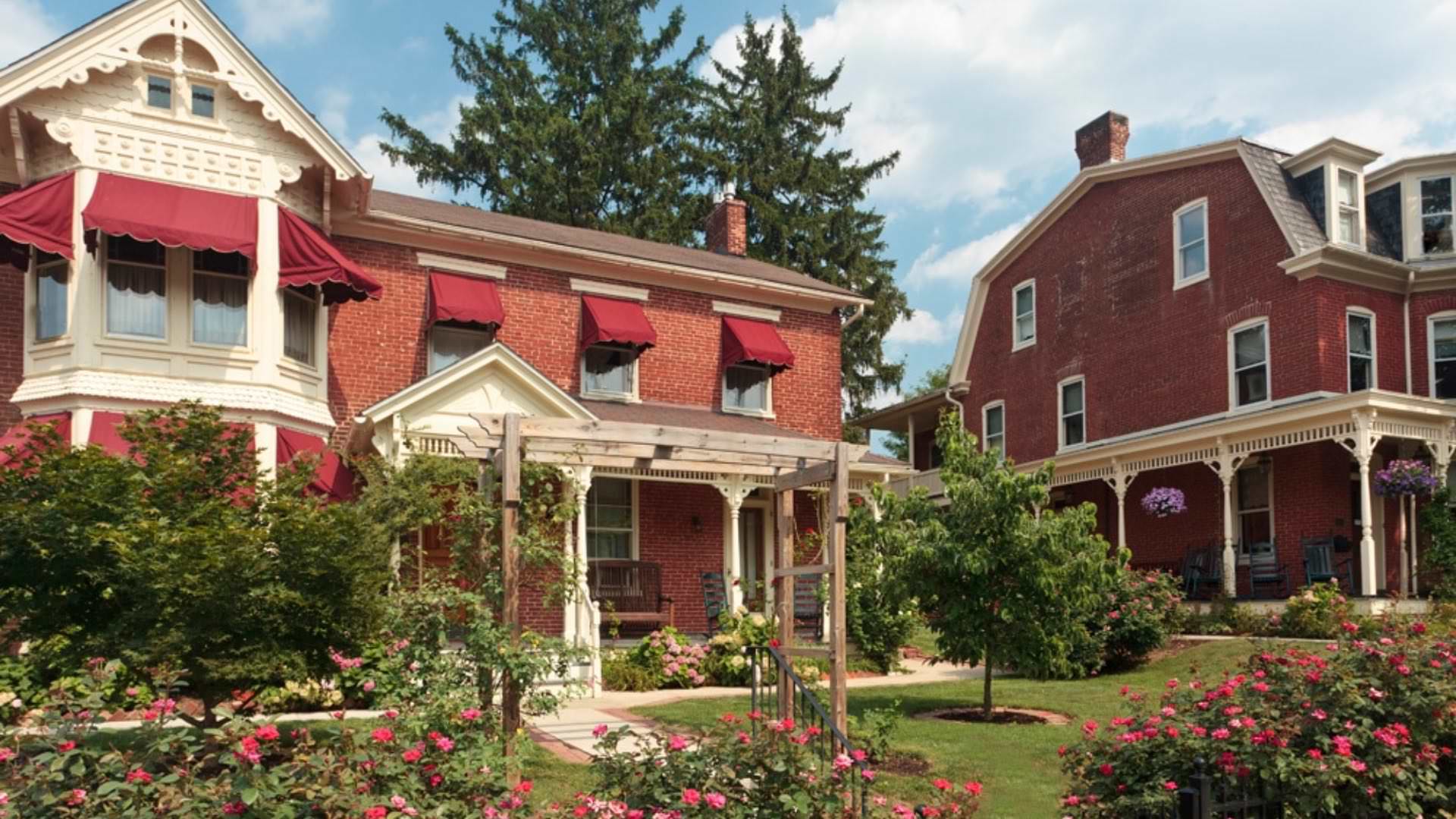
What Is Your Inn Worth?
Seller’s Guide, Step 2 of 7: Understanding the Value of an Independent Lodging Business
Whether you plan to sell next year or a decade from now, understanding what drives the value of your inn helps you make better decisions as an owner. This guide expands on Step 2 of our seven-step overview of selling an inn, bed and breakfast or boutique hotel. It explains how buyers, lenders, and the market look at value, and why the answer often depends on more than the real estate.
In brief: Potential attracts buyers. Proven performance supports financing. A realistic asking price needs both.

Start With the Business, Not Just the Real Estate
A tax assessment, residential appraisal, online estimate, or opinion from a local real estate professional may provide useful information about the property, but it doesn’t necessarily answer the larger question: What is the lodging business worth as an operating enterprise?
A prospective buyer is looking at both. The land and buildings have value, but the buyer also wants to understand how much revenue the business generates, what it costs to operate, how much income is available to support ownership and debt service, and whether that financial performance is likely to continue after the current owner leaves.
That’s why valuing a bed and breakfast, inn or boutique hotel is usually more complicated than valuing either a residence or conventional commercial real estate.
Financial Performance and Cash Flow Matter
Historical financial performance is an important component of value. Revenue matters, but revenue alone doesn’t tell the whole story. Buyers and lenders will also examine operating expenses and the resulting profitability or cash flow.
Owner-operated inns and B&Bs often require additional analysis because their financial statements don’t always tell the complete story. Owners may receive benefits through the business, perform work a new owner might otherwise have to pay someone to perform, or incur discretionary or nonrecurring expenses.
Legitimate adjustments can provide a clearer picture of the economic benefit the business provides to its owner. But those adjustments need to be reasonable and supportable—particularly when a buyer needs financing.
The objective isn’t to make the numbers look better. It’s to present an accurate and understandable picture of how the business actually performs.
Income Can Limit What a Buyer Can Finance
Because a buyer is acquiring an income-producing business, financial performance can significantly influence what a buyer can reasonably pay.
Unlike a typical residential mortgage, financing for an income-producing lodging property generally requires the business itself to demonstrate sufficient income to support the proposed debt.
One measure commonly used by commercial lenders is the Debt Service Coverage Ratio (DSCR). DSCR compares qualifying net operating income with the annual debt payments required on the loan.
While requirements vary by lender and loan program, a DSCR of approximately 1.25x is a common underwriting benchmark. In simple terms, the business would need to generate at least $1.25 of qualifying income for every $1.00 of annual debt service.
This creates an important relationship among financial performance, financeability, and asking price.
If the asking price requires a buyer to borrow an amount that results in debt payments the business cannot support, financing may be difficult to obtain at that price—even if the underlying real estate appears to justify it.
Growth Potential Attracts Buyers—but Lenders Finance Performance
Buyers are almost always interested in potential. They want to know not only what your inn is doing today, but what they might be able to do with it tomorrow.
But there is a critical distinction between potential income and demonstrated income.
A seller may reasonably believe that adding weddings could generate another $100,000 in annual revenue. A buyer may agree. The lender, however, will almost never increase the acquisition loan simply because that opportunity exists.
Commercial lenders generally underwrite an inn acquisition primarily on documented historical financial performance and income they can verify. Revenue from cabins that haven’t been built, weddings that haven’t been booked, guestrooms that haven’t been added, or occupancy increases that haven’t occurred is still projected income.
Buyers may pay attention to what the business could earn. Lenders generally finance what the business has demonstrated it actually has earned over time.
If the asking price exceeds what demonstrated earnings can support, the difference has to come from somewhere. The buyer may need to contribute more cash, the seller may need to provide financing, another financing structure may be necessary, or the price may ultimately need to change.
Turn Potential Into Performance Before You Sell
This is another reason to begin exit planning early.
Suppose your property has a significant opportunity to develop weddings and events. If you sell today and tell buyers that events could generate another $100,000 in annual revenue, you are marketing potential.
If instead you develop that business several years before selling and can demonstrate growing event revenue and profitability, you’ve changed the conversation. What was once potential has become operating history.
Not every opportunity should be pursued. Some require more capital, time, or management effort than the likely return justifies. But when a promising opportunity can be converted into profitable, documented revenue before a sale, it should improve both business value and financeability.
Use Comparable Sales Carefully
Sales of similar lodging businesses can provide another indication of value. The challenge is finding properties that are truly comparable.
Inns, B&Bs and small boutique hotels vary dramatically in guestroom count, location, condition, amenities, owner accommodations, event facilities, acreage, revenue, profitability, operating model, and local demand.
A comparable sale becomes much more useful when you understand why the property sold for that amount and how its real estate, financial performance, location, physical characteristics, financeability, and marketability compare with yours.
For a closer look at the metrics often used to value small lodging businesses, including price per room, gross revenue multipliers, and capitalization rates, see Chuck Anderson’s article What Is a Boutique Hospitality Business Worth?
Consider FF&E, Goodwill and Other Business Assets
Most lodging business sales include more than real estate. Furniture, fixtures and equipment (FF&E) are generally necessary for the buyer to continue operating after closing.
An established business may also have goodwill associated with its reputation, repeat guests, referral relationships, online presence, reviews, operating history, and recognition in the marketplace.
These assets contribute to the overall opportunity, but they generally shouldn’t simply be assigned separate values and added together to determine an asking price. A buyer is ultimately evaluating the value and earning capability of the complete enterprise.
Marketability Matters
Value and marketability are closely related, but they aren’t the same thing.
Price point, location, owner accommodations, property condition, required owner involvement, seasonality, local regulations, financing requirements, and opportunities for future growth can all affect the number of buyers willing and able to purchase an inn.
The important distinction is between marketing the opportunity and pricing the unrealized results.
That’s why a useful valuation considers more than a spreadsheet. The question isn’t simply what the real estate is worth or what the business could become. It’s what the business is worth today, what its demonstrated financial performance can support, and how buyers are likely to respond to the opportunity.
Marketability Assessment & Valuation
You can research many of these factors yourself. Reviewing financial statements, investigating comparable sales, estimating real estate and FF&E values, studying competing properties, and identifying opportunities for growth can all provide useful perspective.
For owners who want a more comprehensive and objective analysis, Marilyn Bushnell & Associates offers a Marketability Assessment & Valuation (MA&V).
An MA&V looks at the whole business, including its financial performance, the property, its market position and how financeable it is, and at how buyers and lenders are likely to see it. It can also point to opportunities worth pursuing before you sell, while there is still time to turn them into documented results.
Questions About Valuing an Inn
What is a Marketability Assessment & Valuation (MA&V)?
An MA&V is our objective analysis of what your business is worth and how marketable it is to today’s buyers. It looks at financial performance, the property, the market and the factors that affect how a buyer and lender will view the inn. It can also point out opportunities worth pursuing before you sell. Learn more about the MA&V.
How does a buyer’s financing affect what my inn can sell for?
Most buyers finance part of the purchase, and lenders base what they will lend on the income the business has actually produced. If the inn’s documented cash flow can’t support the debt on a given price, buyers may not be able to borrow enough to pay it, no matter how attractive the property is. That is why pricing has to reflect both the real estate and the business.
Do I need an appraisal to sell my inn?
Not to put it on the market. A buyer’s lender will order its own appraisal during the transaction. For pricing, what matters is a valuation that accounts for the business as well as the real estate. A residential-style comparison alone can miss what the operating business adds, or overstate a price the income won’t support.
Want an Objective Look at Your Inn’s Value?
Whether you are planning a sale or simply want to understand where your business stands, a conversation about value, marketability, and timing is a good place to start.


