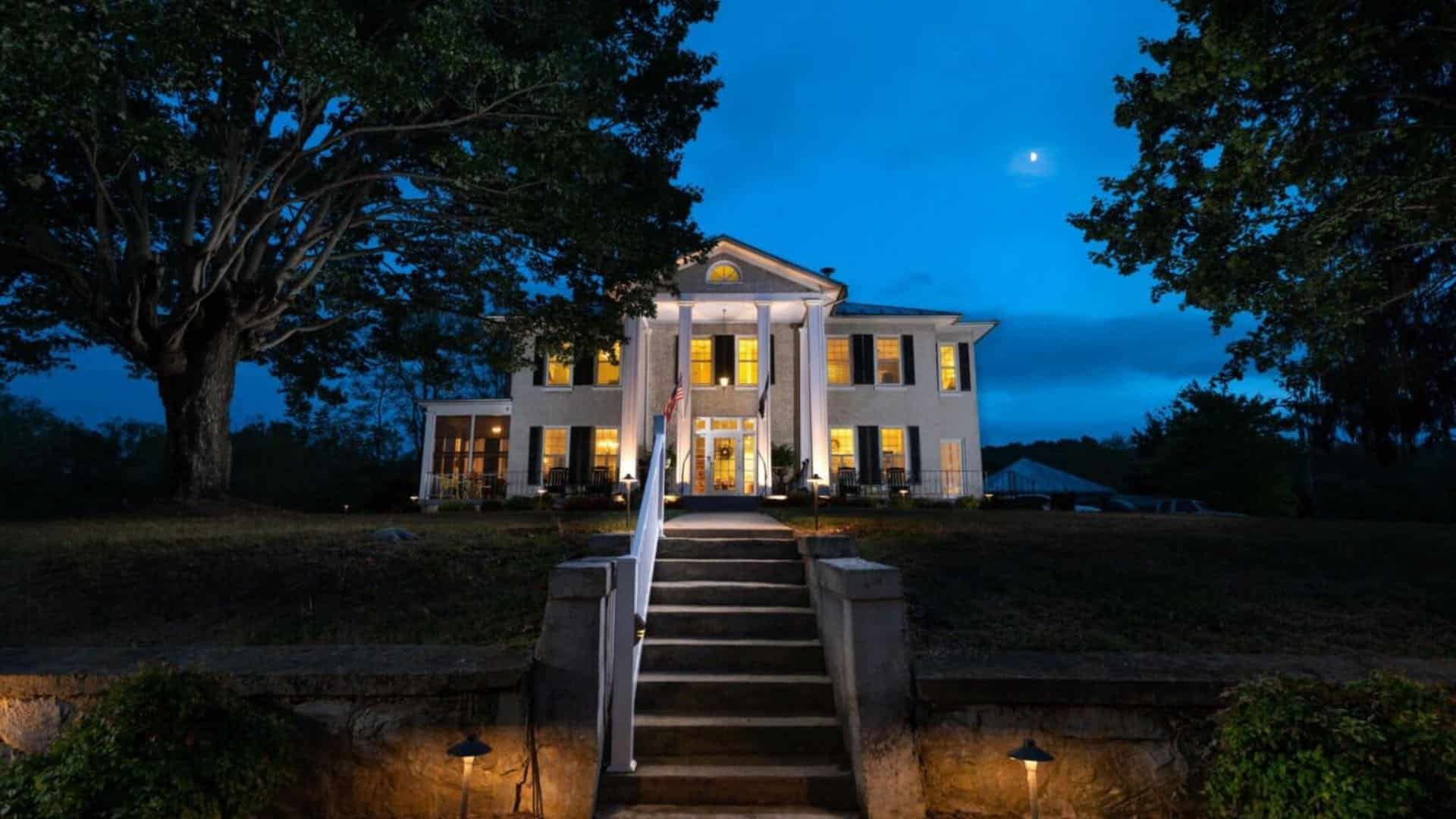
Congratulations to the new owners of Steeles Tavern Manor in Steeles Tavern, Virginia. The sale took 148 days, and an acceptable letter of intent was in place about a month after listing. The property is a Select Registry inn on just over 50 acres. At the time of sale it had 10 rental units: five guest rooms in the historic 1916 manor house and five self-contained cabins, plus a spa. Since then, the new owners have added another guest room and another cabin.
Pricing it to hold up
Before listing, we did a full Marketability Assessment & Valuation (MA&V). That gave the sellers an asking price they could defend in front of a sophisticated buyer. With an investor-buyer, the price has to stand up to the buyer’s own analysis.
Why it attracted an investor buyer
The buyer was a real estate investment company that already owned several boutique hospitality properties. Steeles Tavern became the fourth Select Registry inn in its portfolio. We call properties like this “investment grade.” They have several profitable lines of business; here those were B&B rooms, cabin rentals and a spa. Their margins are strong enough to compete with other investment options. They also produce enough cash flow to pay staff for all the labor the business requires. The owner doesn’t have to work in it every day to keep labor costs down. When an inn like this comes on the market, investor buyers compete with the traditional owner-operators, and it tends to sell quickly.
Our network made a quick sale possible. Through years of industry contacts, especially within Select Registry, we knew which buyers were looking for exactly this kind of property.
Bridging two ways of running an inn
We supported both sides of this transaction. The main challenge was aligning two business models. The sellers had run Steeles Tavern as owner-operators, living on site and involved in every part of the business. The buyer planned to own it from offsite and run it through staff and systems. These models look at staffing, reporting and the role of the owner differently. Understanding both points of view helped each side make sense of the other’s questions and expectations, and that kept the deal moving.
A handover on a deadline
The buyer was completing a 1031 exchange, so the closing had to meet fixed IRS deadlines. Both sides committed to those dates and kept communication open, and the transition went smoothly.
What sellers can take from this
Investors are an important part of today’s market for well-run inns. If your property has more than one source of revenue, enough cash flow to be fully staffed, and clean, documented financials, the pool of potential buyers may be larger than you expect. Talk with us about where your inn fits.
Updated October 2026 with the full story of the sale.


